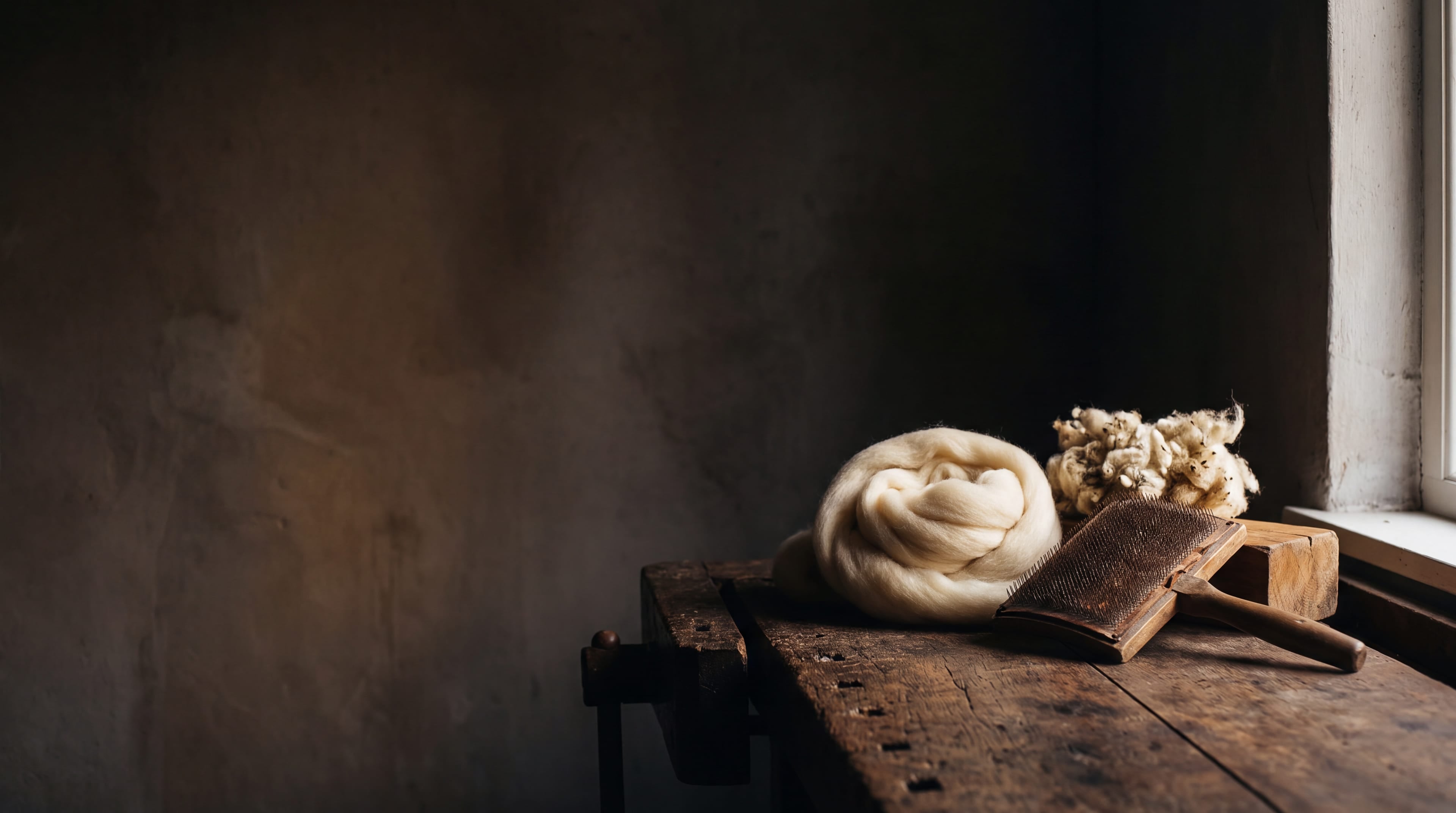
Two centuries of the wool trade
Russian Wool Company carries on the traditions of wool processing handed down by two mills: the Troitsk Worsted Mill, founded at the end of the 18th century, and the Bor Wool Scouring Mill, built in the middle of the 20th.
- 1797
The manufactory at Troitskoye
The Troitsk Worsted Mill is one of the oldest textile enterprises in Russia. Its official founding date is 1797, when Moscow merchant A. P. Prokhorov opened a cotton-spinning mill in the village of Troitskoye near Moscow. Other sources trace textile production at Troitskoye back to 1751, when the village’s owner Yakov Evreinov obtained permission from Empress Elizabeth to open a manufactory.
In 1865 the mill passed to new owners and was re-equipped to produce army cloth. Steam engines, new buildings, a dormitory, a hospital and a school appeared. Until 1976 the enterprise made fine woollen cloth, after which it switched to combed tops, and from the 1990s it also produced yarn for hand and machine knitting and for worsted fabrics.
- 1940
The idea of a mill in Bor
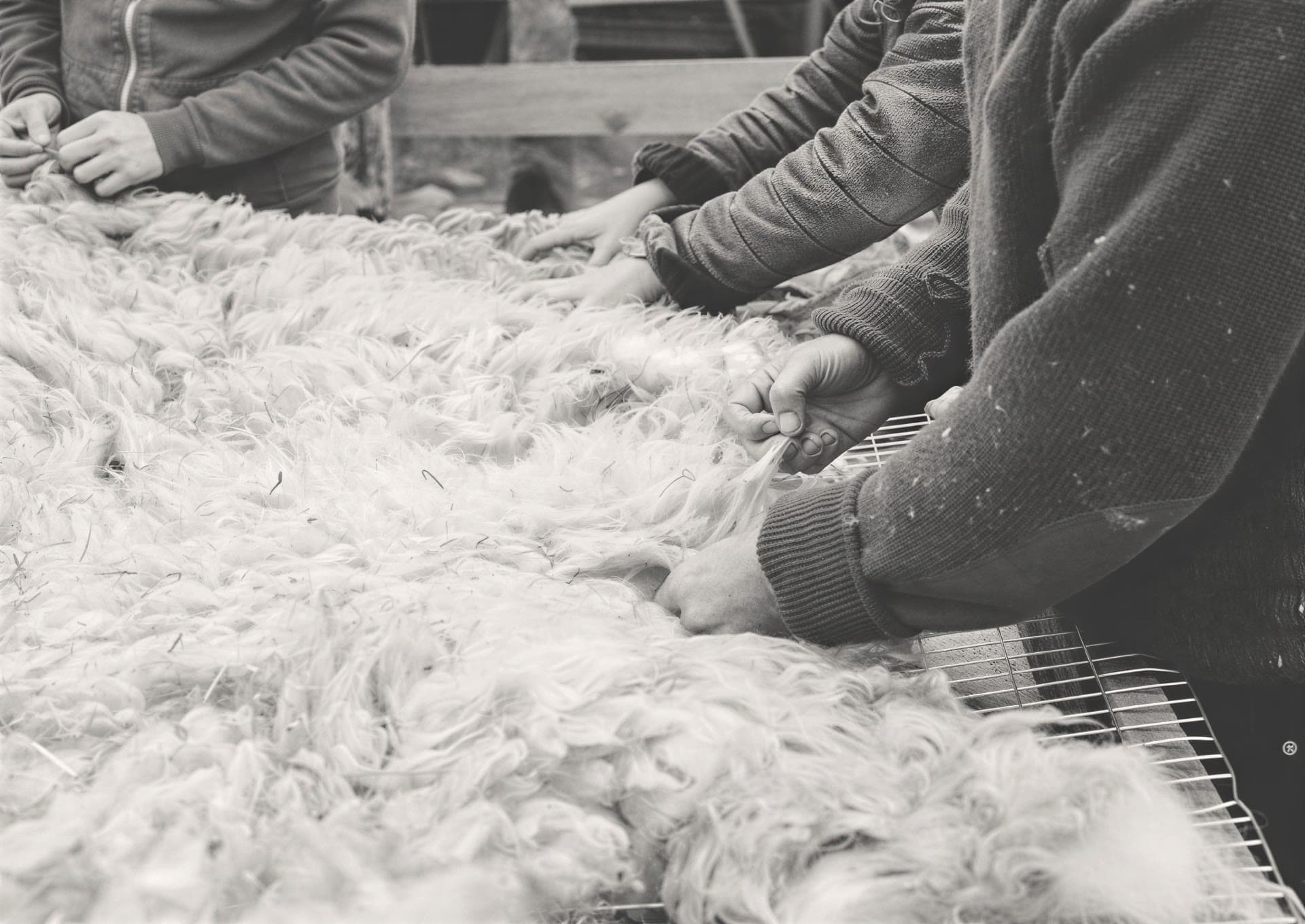
Even before the Second World War a wool transhipment depot was set up near Tolokontsevo railway station, on the grounds of Felt Factory No. 6, to supply local mills with wool.
In 1940 the USSR People’s Commissariat for the Textile Industry decided to build a wool scouring mill near Tolokontsevo. The war halted the project; construction resumed only in November 1946.
The chosen site made obvious sense: to the north it bordered the siding of Factory No. 6 and collective-farm land, to the east lay the industrial site and workers’ settlement, and the western and southern boundaries adjoined the railway right-of-way. Raw wool was to come from the Gorky and Kirov regions and the Chuvash, Mari and Udmurt autonomous republics. The design capacity was about 5,000 tonnes of scoured wool a year.
- 1953
Construction and start-up
Given the country’s difficult post-war economy, the design was revised several times: the main sorting and scouring-drying operations were placed in a single four-storey building instead of two two-storey ones, and the auxiliary buildings were grouped as tightly as possible.
In 1950 the contractor Stroygaz began construction, and in 1953 the mill was commissioned. The complex comprised the main building, a boiler house and several auxiliary shops and warehouses. Next to it grew the workers’ quarter “Druzhba”. Staff were recruited from across the country — from the Klintsy Textile College in the Bryansk region to the Omsk College of Light Industry.
- 1956
Growth
Two continuous scouring lines started in 1956, joined by a third in 1957. Full-scale operation required large volumes of clean process water, and the environmental impact of production demanded a prompt solution.
In the early 1960s a large waste-water treatment complex — one of the most advanced of its time — was built and commissioned on the mill grounds.
- 1990s
A new production chain
In the 1990s the Troitsk Worsted Mill modernised its equipment and opened a new production chain — spinning yarn from combed tops. Italian machinery was purchased to produce yarn for hand and machine knitting.
These years saw the emergence of two well-known Russian brands — Pryazha iz Troitska (“Yarn from Troitsk”) and Pekhorsky Textile.
- 2011
A full cycle
In 2011 the Bor Wool Scouring Mill joined the Troitsk Worsted Mill group. This made it possible to build a complete processing line — from scouring raw wool to the finished product. The Bor site, with its three main shops — raw wool, sorting and scouring — and auxiliary services, processed every type of sheep’s wool.
- 2018
Russian Wool Company
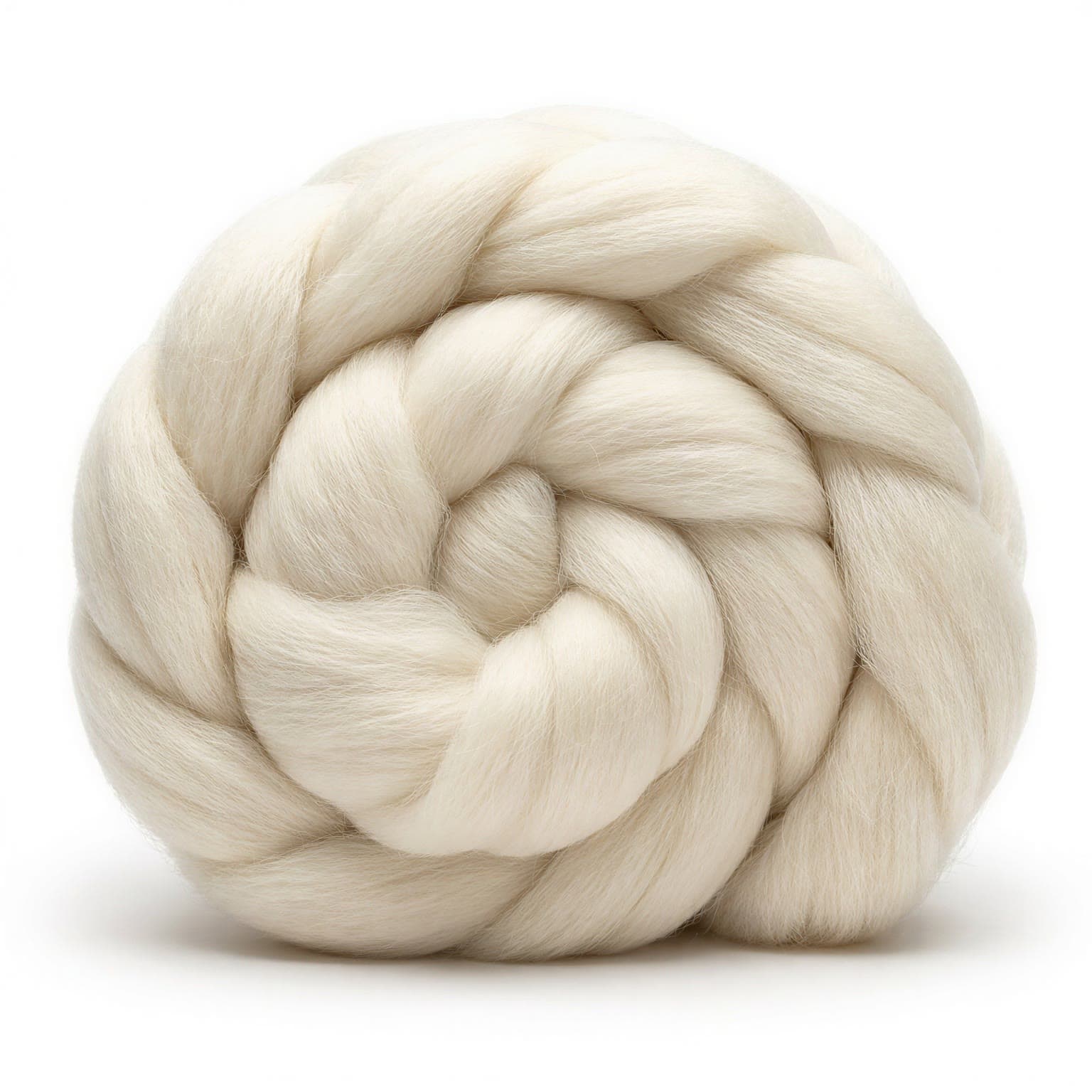
In 2018 production of pure-wool combed tops began at the Bor site under a new brand — Russian Wool Company. The Neklyudovo wool processing cluster broadened its horizons: wool was now not only scoured here but also combed into tops.
- 2020
Production moves to Bor
In 2020 the preparation and carding shop of the Troitsk Worsted Mill — the first link in the technological chain — was relocated to the Bor site, closer to the raw material. Two mills with different histories were finally united in a single production complex.
- Today
Russian Wool Company
Russian Wool Company is one of the few textile enterprises in Russia that still produces pure-wool combed tops. We make every type of tops — fine, medium and semi-coarse — and Russian merino wool has always been, and remains, our main raw material.
We care deeply about the traditions of both mills and about the people who built them. Family management lets us make decisions quickly and take personal responsibility for the quality of every lot.